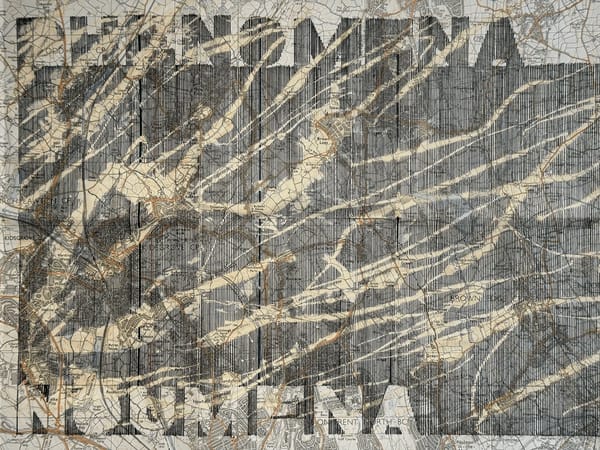
What are you doing?
‘What can I do, Tertius?’ said Rosamond, turning her eyes on him again. That little speech of four words, like so many others in all languages, is capable by varied vocal inflexions of expressing all states of mind from helpless dimness to exhaustive argumentative perception, from the completest self-devoting fellowship to the most neutral aloofness. Rosamond’s thin aloofness threw into the words ‘What can I do?’ as much neutrality as they could hold.
Middlemarch - George Eliot
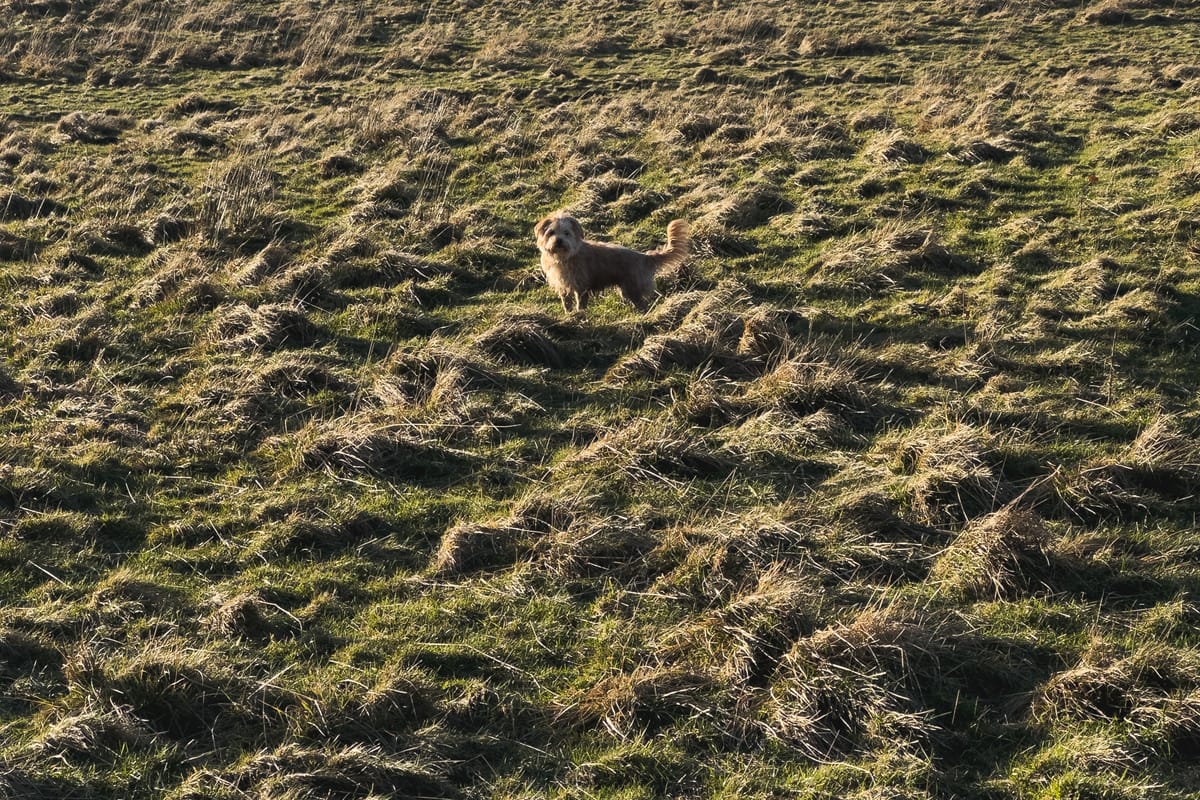
Sometimes my girlfriend asks our dog 'What are you doing?'. It always strikes me as being quite funny. We'll be out in the park. Pip will be hanging back behind us. Charlotte will shout ‘What are you doing?’ It’s affectionate, kind of a private joke, but also semi serious. She wants to know what Pip is doing, but revels a little in the fact that Pip isn’t going to answer her. It’s almost as if Pip is doing something more useful than eating a clump of dry grass.
I enjoy it. The redundancy of it. If you break it down Pip very probably doesn’t understand a word of it. She’s picked up some words really quickly. ‘Cheese’, ‘Park’, ’Treat’. Simple words with simple associations. None of the words in that question, however, will mean a thing for her.
- What = Abstract interrogative. What does this point to for a dog?
- Are = A plural of ‘be’. Do most humans really understand what this means really?
- You = Maybe Pip would get some sense of this. There’s a lot of texture in ‘You’ but I doubt she understands any of it outside of the context of a full sentence. I think this might be the bit I enjoy most. The idea that Pip has an identity that could be wrapped in something so familiar.
- Doing = A very general verb. She knows ‘Sit’. But what does a dog do with something so general as this?
What can you take from that sentence? What is it that makes this meaningful anyway, let alone to a dog?
Pip’s language level is pretty much fixed at sounds that tell her she’s going to get some food or go out to the park. There’s no sense at all that she’ll ever synthesise a sentence, or understand anything abstract.
Asking Pip this question feels like one of Wittgenstein’s Language Games. A simple word gains different meanings through context. But also many uses of language can only take shape by the kind of game playing a dog can’t really take part in. The language we use day to day is more a set of rules we’re constantly playing with, and breaking.
But a game’s broken rules are only broken because we agree on some level how they should be kept. And when broken rules evolve to become the rules, that’s just the same agreement re-flowering. Most language games are a kind of negotiation. This one is a drop in to a void, and weirdly that’s part of the pleasure of it. That’s its own game.
So to come back to the original question, ‘What are you doing?’ It’s a lot like the quote at the beginning of this post. Change the emphasis on each word in the sentence. WHAT are you doing? What ARE you doing? What are YOU doing? What are you DOING? What can this question become when it’s not spoken into a void? There’s so much in that gap, I think. In the gap between what you’ve said and what is heard.